Is the US DJI Drone Ban the End of Wedding Drone Footage?
The looming DJI US ban threatens to disrupt an industry where drone footage has become essential, not optional. DJI commands an estimated 70% of the global drone market, with some analysts suggesting their dominance exceeds 90%. As wedding photographers and filmmakers, we've witnessed firsthand how drone footage has evolved from a luxury add-on to a fundamental storytelling element.
However, Washington's stance is primarily shaped by national security concerns surrounding Chinese technology, not photography issues. Consequently, the upcoming ban, a result of the National Defense Authorization Act requiring companies like DJI to pass formal security audits, will profoundly impact everyone from independent filmmakers, wedding cinematographers, and YouTubers to large production houses and commercial photographers. Furthermore, if DJI drones vanish from the US market, professionals will face significant challenges finding replacement parts, as users will be unable to purchase new batteries, controllers, or repair components for their current equipment.
We believe in setting expectations upfront and planning ahead, which is why understanding this ban's implications and exploring alternatives has become critical for creative professionals who rely on aerial imagery.
DJI banned from future sales: What this means for filmmakers
On December 22, 2025, the Federal Communications Commission took decisive action that fundamentally changes the future of drone filmmaking in America. The FCC officially added foreign-made drones and components to its national security "Covered List," effectively preventing DJI and other non-US manufacturers from releasing new drone models in the American market.
Understanding the FCC Covered List and NDAA deadline
The FCC's decision didn't appear out of nowhere. The 2025 National Defense Authorization Act (NDAA) specifically directed federal agencies to conduct a security audit on foreign drone manufacturers and make a determination about their addition to the Covered List by December 23, 2025. This deadline established a clear timeline for potential restrictions on companies like DJI, whose market share was previously estimated between 77% and 90% among US hobbyists and public safety agencies.
Placement on this list means foreign-produced drones cannot receive new FCC approvals through the agency's radiofrequency equipment authorization program. Without this crucial authorization, no new drone models can legally be imported, marketed, or sold in the United States. Specifically, the ban applies to all "uncrewed aircraft systems" and "UAS Critical Components" produced abroad unless explicitly cleared by the Department of Defense or Department of Homeland Security.
Why the ban affects new models, not current drones
For filmmakers already using DJI equipment, there's both relief and concern. The FCC clarified that previously authorized equipment remains legal. According to official statements:
- Existing DJI drones and previously FCC-approved models can still be legally operated
- Current inventory already imported can continue to be purchased and used
- The ban primarily affects future drone models and their components
Nevertheless, significant challenges loom ahead. The restrictions cover critical components such as cameras and batteries, which could make upgrading and maintaining existing equipment increasingly difficult over time. Additionally, firmware updates may require new FCC approvals, potentially limiting the ability of manufacturers to revise and update their products.
DJI's response and request for a fair review
DJI responded swiftly to the FCC action, expressing disappointment while emphasizing continued support for its US customers. The company noted that "no information has been released regarding what information was used by the Executive Branch in reaching its determination.
In direct communications, DJI has consistently maintained that concerns about their data security are "not grounded in evidence and instead reflect protectionism, contrary to the principles of an open market. Adam Welsh, DJI's Head of Global Policy, previously wrote to regulators stating: "We stand ready to work with you, to be open and transparent, and provide you with the necessary information to complete a thorough review.
Despite these appeals, the regulatory path forward remains uncertain. The FCC fact sheet indicates new products might eventually be cleared for launch based on determinations made by national security agencies, yet DJI faces an uphill battle in a political climate increasingly skeptical of Chinese technology. The company has thanked users who have spoken up, noting they remain "deeply grateful to users across the country who shared how DJI technology supports their work and their communities.
Filmmakers face rising costs and limited drone availability
Across the United States, professional filmmakers are already experiencing the practical effects of looming restrictions on DJI products. The impact extends beyond regulatory concerns, creating immediate challenges for content creators who rely on aerial footage.
DJI drones banned in US stores due to customs issues
Since late 2024, U.S. Customs and Border Protection has been holding DJI drone shipments at ports under the Uyghur Forced Labor Prevention Act (UFLPA). This law blocks imports suspected of involving forced labor in China's Xinjiang region. Although DJI strongly denies these allegations—stating all manufacturing occurs in Shenzhen or Malaysia with no connection to Xinjiang—the customs holds continue.
The results are starkly visible at retailers nationwide. By mid-2025, shoppers noticed DJI sections at major stores suddenly empty. Reporting from The Verge described Best Buy locations with zero DJI drones available—no boxes, no price tags—while DJI's own US webstore listed nearly all drones as out of stock. Even specialty retailers like B&H appeared to have limited inventory, with only the entry-level DJI Neo available at the time of reporting.
This shortage represents more than temporary supply chain disruptions. The US market is experiencing what industry insiders describe as a "de facto disappearance" of DJI products from store shelves.
Used market prices surge amid supply shortages
The supply crisis has triggered a predictable economic response: skyrocketing prices for available equipment. Previously affordable models now command premium prices in the secondary market. For instance:
- Mavic 2 Pros that once sold for as low as $450 used now fetch between $600-$800 for the aircraft alone
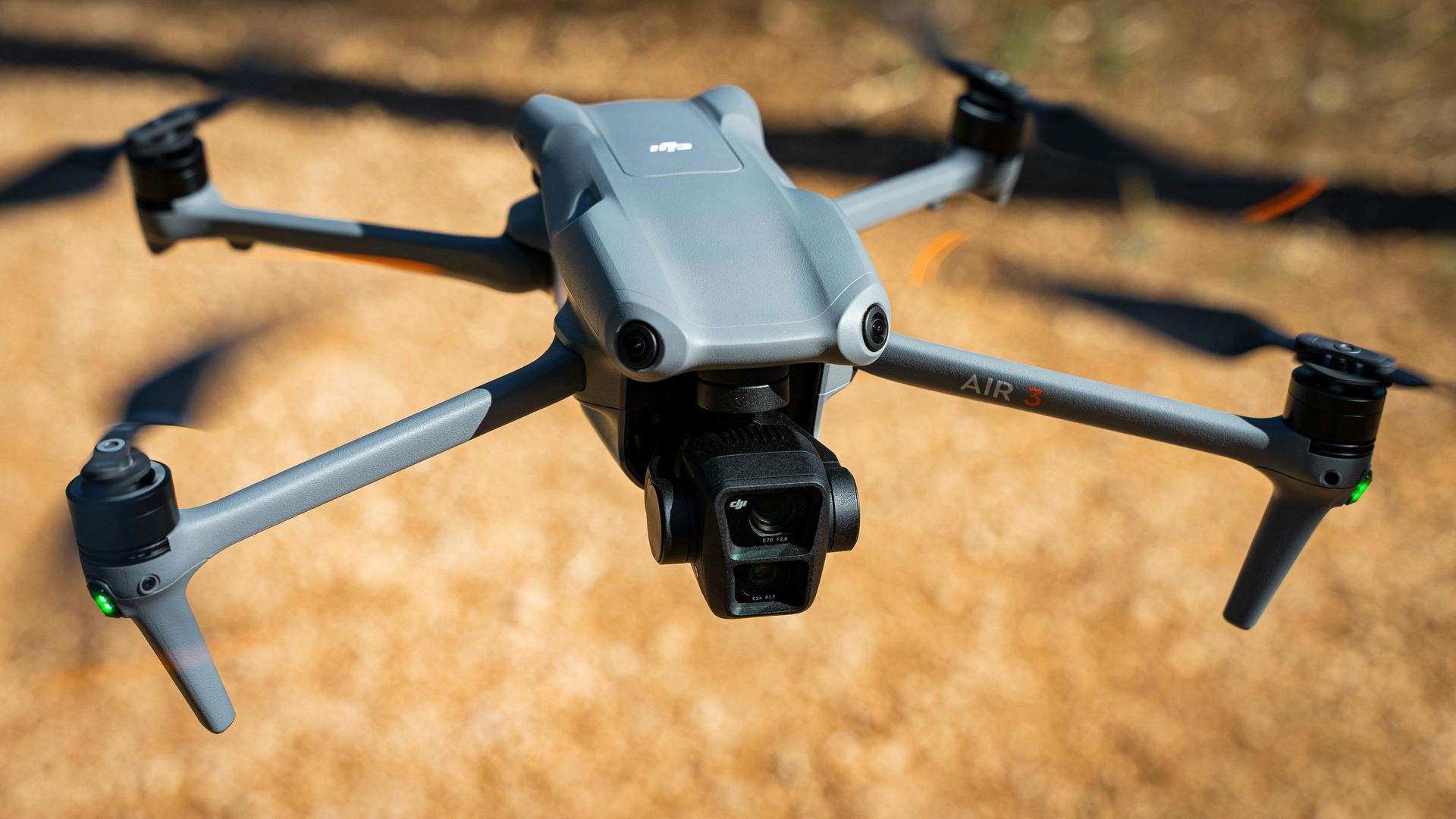
- DJI Air 3 models purchased for $700 in 2024 now resell for approximately $1,000 without accessories
- The base DJI Mini 4 Pro, originally priced around $759, could theoretically cost $1,639 with the new 170% tariffs applied
Moreover, the tariff situation compounds these challenges. Early 2025 saw the U.S. impose new tariffs on Chinese electronics, causing DJI product retail prices to jump by 30-35%. A drone previously priced at $999 now retails closer to $1,300, creating significant strain for budget-conscious professionals.
Currently, some retailers report price increases that outpace even these substantial tariffs. One filmmaker noted that the DJI Air 3S Fly More combo increased from $1,600 to $2,250—a $650 jump.
Spare parts and repairs become harder to access
Perhaps most concerning for working professionals is the growing difficulty in maintaining existing equipment. Content creators are now stockpiling batteries, propellers, and spare parts while they remain available.
For cinematographers using professional systems, the situation is particularly dire. The DJI Inspire 3, which lists for $16,499, has reportedly been backordered since early 2025 due to import delays. Replacement parts for this system—critical for professionals with ongoing client commitments—are increasingly scarce.
Indeed, industry advocates describe the impact as "horrible" for U.S. drone operators and retailers. "People aren't getting their drones. And now it's not just drones, it's other equipment," noted Vic Moss, CEO of the Drone Service Providers Alliance. Some retailers have reportedly laid off staff due to inventory shortages.
This maintenance challenge creates long-term sustainability problems. As one industry expert explained: "The industry would cease to exist in two years because drones are not made to last. The drones I'm flying now won't be flying in two years... and then safety becomes an issue".
Creative professionals weigh alternatives to DJI
With DJI's future in the American market uncertain, filmmakers and wedding professionals are frantically exploring alternatives. Yet finding comparable options presents significant challenges for creators who depend on aerial footage for their livelihood.
Why US-made drones haven't caught up yet
The fundamental issue facing filmmakers is straightforward: currently, no US or allied drone maker matches DJI's combination of capability, price, and manufacturing scale. American-made options typically cost significantly more while offering fewer features. Skydio, once considered DJI's most promising US-based competitor, exited the consumer market entirely in 2023 to focus exclusively on enterprise and government applications.
This vacuum exists primarily because developing competitive consumer drones requires massive investment. As one industry expert noted, "The failed GoPro Karma drone is the perfect example of just how challenging it is to design a drone for the first time. Essentially, DJI's vertical integration—controlling everything from hardware to software to accessories—created an ecosystem that no American manufacturer has successfully replicated at consumer-friendly prices.
Skydio, Autel, and other options under scrutiny
Filmmakers considering alternatives face limited choices:
- Skydio: Now focused on enterprise solutions like the X10, which excels in autonomous navigation but costs substantially more than comparable DJI models
- Autel Robotics: Another Chinese manufacturer facing similar regulatory scrutiny, with prices typically running 2-3 times higher than comparable DJI drones
- Parrot: Offers the Anafi USA, which is French-made but expensive and lacks camera capabilities most photographers need
- Freefly Systems: Produces professional cinematography drones starting around $50,000—compared to $2,000 for capable DJI setups
Unfortunately, major US drone manufacturers like Skydio, Parrot, Freefly, Teal, WISPR, and Hylio presently focus on industrial, agricultural, and public safety sectors rather than consumer or prosumer filmmaking.
Challenges in replacing DJI's image quality and features
Notably, alternatives often fall short in critical performance areas. When Skydio produced consumer drones, both image quality and autonomous flying capabilities were inferior to those of DJI models. Meanwhile, Autel offers high-resolution cameras and good flight time, but at premium prices.
Professional cinematographers face particularly difficult choices. According to industry experts, replacing a $2,000 DJI setup might require investing in systems costing upward of $50,000 from specialized manufacturers like Freefly. Furthermore, many "American" options still rely on Chinese made components from motors and sensors to batteries, making a rapid, like-for-like swap virtually impossible.
The situation creates an opportunity for US manufacturers to potentially return to the consumer market, albeit with higher prices. As one industry observer noted, "I'm fully expecting some US drone companies to return to consumer drones in the absence of key competitors like DJI. Nevertheless, any meaningful alternatives will take time to develop, leaving filmmakers in a difficult position for the foreseeable future.
Legal and technical risks complicate drone operations
Beyond immediate supply chain disruptions, drone operators face technical hurdles that could limit their equipment's longevity. The nuances of these restrictions create a complex web of compliance challenges for wedding videographers and filmmakers.
Firmware updates may require new FCC approvals
For filmmakers with existing DJI equipment, a critical concern emerges regarding software support. Under current regulations, even existing DJI drones become ineligible to receive modifications requiring amended FCC authorizations. This restriction effectively limits manufacturers' ability to update their products over time.
Throughout the transition, DJI has stated it intends to support existing users, yet firmware updates, repairs, and spare parts may become "slower, harder to obtain, or unavailable" as restrictions tighten. This limitation creates what industry experts call a "slow-burn problem," especially for businesses that regularly scale by adding identical platforms.
Data privacy concerns and Local Data Mode explained
At the heart of the regulatory action are data security allegations, though DJI maintains that "no concrete public evidence has been presented showing that DJI drones are used for spying or unauthorized data collection.
In response to these concerns, DJI offers Local Data Mode (LDM)—essentially an internet "kill switch" that:
- Prevents the app from sending or receiving any data over the internet
- Allows operators to fly completely offline
- Severs all connections to DJI servers
When activated, LDM eliminates internet connectivity but also disables certain features. Users lose access to map data, geofencing information about restricted areas, and firmware updates. Importantly, flight telemetry data remains stored on the aircraft regardless of whether LDM is active.
State-level bans add another layer of complexity
Alongside federal regulations, state-level actions create additional challenges. Many states are currently phasing out non-compliant drones, creating a patchwork of regulations filmmakers must navigate. These varying requirements can create confusion for operators who work across multiple jurisdictions.
Under these circumstances, wedding videographers face immediate practical concerns. Insurance providers may begin scrutinizing or restricting coverage for equipment considered unsupported. Furthermore, some clients particularly enterprise customers may develop policies against using certain drone platforms due to compliance concerns.
How wedding and event filmmakers can prepare now
As the DJI ban approaches, wedding and event filmmakers must take immediate practical steps to protect their businesses and maintain service quality for clients.
Update firmware and apps before restrictions tighten
Proactive software management is crucial as regulatory challenges mount. DJI has indicated they "have no plans to discontinue product support via firmware or app updates. Nevertheless, download and archive current drone firmware versions locally before any potential interruptions occur. Consider downloading full installers for ground station software (DJI Terra, Pilot 2), APKs for mobile apps, and SDK tools as backups. Once you've established a stable working environment with your current equipment, avoid unnecessary updates that might introduce compatibility issues.
Stock up on batteries, props, and accessories
Given that "drones are not made to last" and "the drones I'm flying now won't be flying in two years, acquiring replacement parts becomes critical. Prioritize batteries as your most important and expensive accessories—alongside propellers and other consumables. For commercial operators, document all serial numbers and configurations of your aircraft, controllers, batteries, and payloads for inventory management and potential regulatory requirements.
Review contracts and insurance for compliance
Modify service agreements to accommodate changing equipment availability. Replace specific language like "DJI drone" with "UAV platform with equivalent capabilities. Include force majeure clauses covering import bans and supply chain disruptions. Regarding DJI Care claims, contact DJI support directly about specific cases, as warranty service may change.
Educate clients on what's changing and what's not
Initiate forthright conversations with clients about the pending FCC restrictions. Assure them you've taken necessary precautions, including securing spares and testing alternative platforms. For long-term projects extending beyond December 2025, transparently discuss potential equipment substitutions should parts or repairs become unavailable.
Conclusion
The looming DJI ban undoubtedly represents a watershed moment for wedding photographers, filmmakers, and content creators across America. Throughout this article, we've examined how federal restrictions will fundamentally alter the aerial imagery landscape that many professionals now consider essential. DJI's market dominance makes finding suitable alternatives particularly challenging, especially considering the significant price differences between Chinese-made options and their American counterparts.
Wedding videographers must therefore act decisively while preparing for a different future. Stockpiling batteries, propellers, and critical parts stands as a practical short-term strategy, though this approach merely delays inevitable transitions. Most current drones will reach end-of-life within two years, regardless of regulatory changes. Additionally, firmware limitations could potentially shorten equipment lifespans further as manufacturers lose the ability to issue critical updates.
Supply chain disruptions have already emptied retail shelves nationwide, causing used market prices to skyrocket beyond reasonable levels. This trend will likely continue, making immediate preparation essential rather than optional. Professional filmmakers face particularly difficult choices when $2,000 DJI setups might need replacement with $50,000 specialized systems from manufacturers like Freefly.
Despite these challenges, our industry has always demonstrated remarkable adaptability. American manufacturers may well see opportunity in DJI's absence, potentially developing new consumer-focused options at competitive price points. Such developments would nevertheless require significant time for research, development, and scaling production.
Until then, wedding professionals should focus on education and transparency with clients. Clear communication about potential equipment changes helps manage expectations during this transitional period. Contract revisions removing specific equipment references also provide necessary flexibility as the regulatory landscape evolves.
The wedding industry has weathered technological shifts before, though admittedly few with such immediate impact on core service delivery. Nevertheless, creativity and storytelling skills ultimately matter more than specific camera platforms. Wedding professionals who adapt quickly while maintaining quality standards will surely navigate these challenges successfully, albeit with adjusted business models reflecting new market realities.
FAQs
Q1. Are DJI drones currently banned in the United States?
No, existing DJI drones are not banned. The restrictions apply to future sales of new DJI drone models in the US market. Previously approved and existing DJI drones can still be legally operated.
Q2. Can I continue using my DJI drone for wedding videography?
Yes, you can continue using your existing DJI drone. However, be aware that future firmware updates and repairs may become more challenging. It's advisable to stock up on spare parts and accessories.
Q3. What are the alternatives to DJI drones for filmmakers?
Some alternatives include Skydio, Autel Robotics, Parrot, and Freefly Systems. However, these options often come with higher prices and may not match DJI's features and image quality. The market is still adapting to fill the gap left by DJI.
Q4. How will the DJI ban affect drone prices?
The ban has already caused price increases in the used market. DJI drone prices have surged, with some models now costing 30-35% more. Alternative brands may also become more expensive due to reduced competition.
Q5. What steps should wedding videographers take to prepare for the DJI restrictions?
Wedding videographers should update firmware and apps, stock up on batteries and spare parts, review contracts and insurance for compliance, and educate clients about potential changes. It's also wise to explore alternative drone options for future projects.