Most camera reviews are written after a few hours of testing or reading spec sheets. This one isn’t.
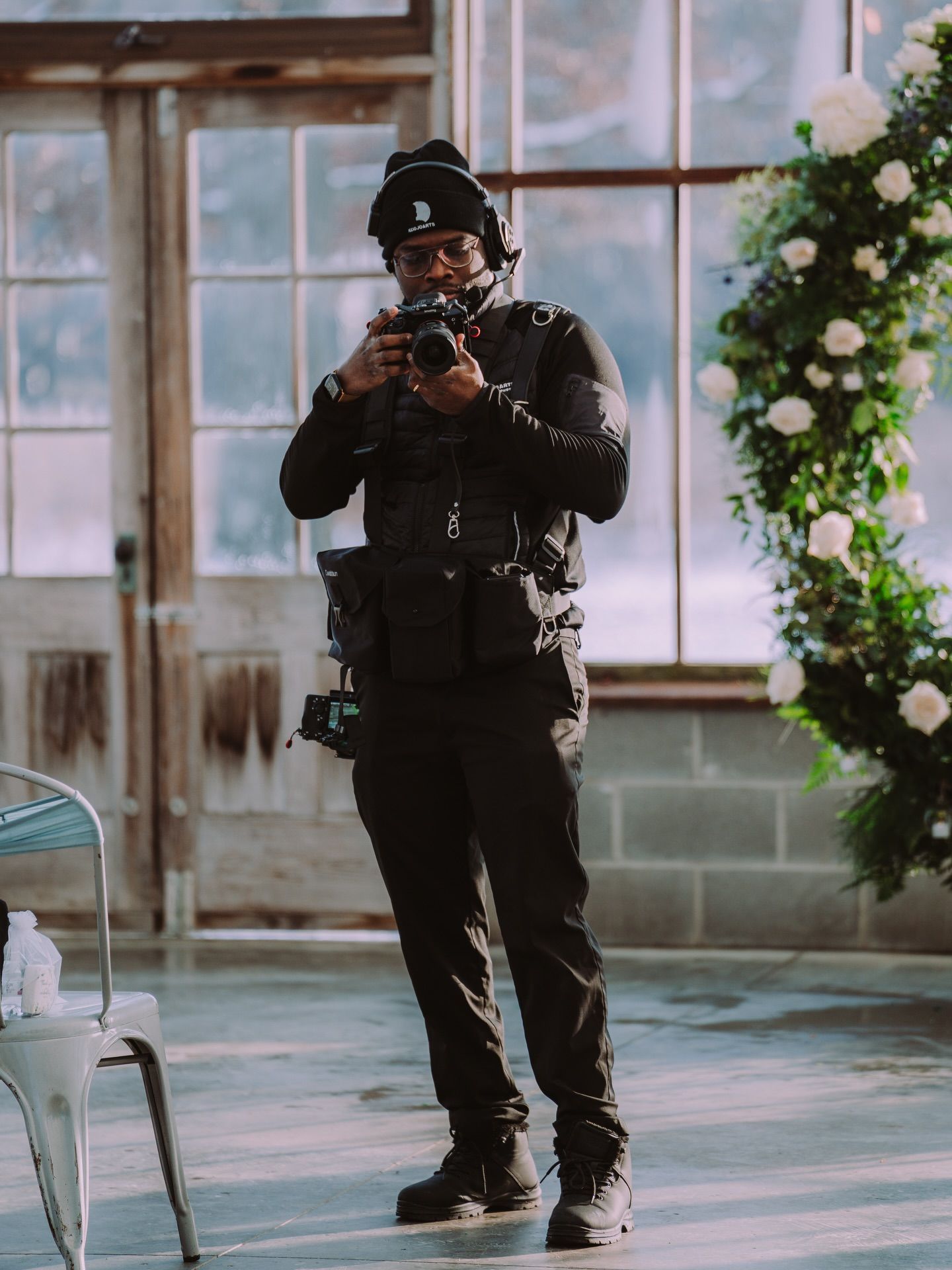
I used the
Sony Alpha a7 IV for more than
100 real shoots over three months, including weddings, client projects, and fast-paced production work. That gave me a clear picture of what this camera does well and where it falls short when you rely on it professionally.
The
Sony Alpha a7 IV sits in an interesting position at $2500 for a new body and $1800 for a used body. After spending three months and 100 shoots with this camera, I've formed some definite opinions about whether it delivers on its promises.
While Sony has repositioned this camera as a mid-tier full-frame option, it certainly packs impressive specs that caught my attention. The 33-megapixel sensor provides plenty of detail, and the improved autofocus with real-time tracking makes capturing decisive moments much easier. However, video shooters should note that 4K 60p footage comes with a 1.5x crop. Throughout all the shoots I’ve done with this camera, I've come to understand why many consider the Sony a7 IV the ultimate hybrid camera for creators who value both photo and video capabilities.
But is it worth the investment? That's the question I'll answer based on real-world experience rather than just specs on paper.
Why I Switched to the Sony A7 IV After 100 Shoots
After fifteen years with Canon DSLRs, switching systems wasn't a decision I made lightly. What ultimately convinced me was experiencing the Sony Alpha a7 IV's impressive autofocus in action. The animal eye tracking locks on from considerable distances and maintains focus remarkably well, even when subjects are moving.
The EVF quality sealed the deal for me - it's significantly sharper than my previous cameras, allowing for more precise composition. Additionally, the 33MP sensor provides that sweet spot between detail and file size, with lossless compressed RAW files averaging a manageable 40-50MB. This resolution gives me enough leeway to crop aggressively when needed without overwhelming my storage drives.
Perhaps most impressive is the camera's stabilization. I've successfully captured handheld shots at shutter speeds as slow as 1/2 second with wide lenses. Even at 200mm, I consistently get sharp images at 1/60th when using the optically stabilized 70-200mm F2.8 GM OSS II.
The buffer performance is equally outstanding - using a CFexpress Type A card, it clears almost instantly even after bursts of 10-20 shots. The extensive E-mount ecosystem offers 333 lens options compared to just 93 for Canon's RF mount, giving me more creative flexibility for future growth.
What the Sony Alpha A7 IV Gets Right
The impressive dynamic range is where the Sony Alpha a7 IV truly shines. In technical testing, it delivers 12.9 stops at SNR = 2 and 14 stops at SNR = 1, making it exceptional for challenging lighting conditions. This performance comes from the advanced 33MP sensor paired with the BIONZ XR processor, which provides an 8x increase in processing speed over previous models.
For videographers, the camera offers substantial upgrades, including 4K 60p recording (though with a Super 35 crop) and 10-bit 4:2:2 internal recording. Moreover, the 7K oversampling for 4K 30p footage ensures exceptional detail and clarity without pixel binning. One standout feature is the breathing compensation function, which automatically adjusts the field of view when focusing to eliminate the distracting "breathing" effect with compatible Sony lenses.
The updated menu system represents a major improvement, now color-coded and side-tab oriented for faster navigation. In addition, videographers benefit from S-Cinetone profiles that match Sony's professional cinema cameras, alongside seven-step AF transition speeds and five-step subject shift sensitivity controls for precise focus management.
Under the hood, the buffer capacity handles over 800 uncompressed RAW+JPEG images, practically eliminating wait times between shots. Finally, the a7 IV includes improved lens compensation options, automatically correcting for shading, chromatic aberration, and distortion with compatible lenses.
Where the A7 IV Falls Short
Despite its impressive features, the Sony Alpha a7 IV has several shortcomings worth noting. The camera struggles with rolling shutter effects, particularly in
4K video mode, where it measures a disappointing 26.8ms. This creates a noticeable jello effect even during relatively slow panning movements.
Another limitation is the crop factor requirement for 4K 60fps video recording, forcing you into Super 35mm mode. This significantly narrows your field of view, effectively turning a 16-35mm lens into a 24-52.5mm equivalent.
High ISO performance disappointed me as well. Noise becomes quite noticeable above ISO 6400, with some users reporting visible noise even at ISO 3000. The electronic shutter readout speed is also problematic at approximately 1/15 second, making it unsuitable for moving subjects.
Build quality concerns exist too – the camera lacks the back magnesium panel found in higher-end Sony models, and some users find the buttons feel "rubbery and hollow" compared to previous generations.
Conclusion
After three months and 100 shoots with the Sony Alpha a7 IV, my verdict comes down to your specific needs as a
photographer or videographer. This camera certainly delivers exceptional autofocus capabilities that make capturing critical moments remarkably easier than with my previous systems. The 33MP sensor strikes a perfect balance between detail and file manageability, while the improved buffer performance practically eliminates waiting between shots.
Nevertheless, the a7 IV isn't without significant compromises. The rolling shutter effect proves particularly disappointing for video work, especially considering the price point. Additionally, the crop factor requirement for 4K 60fps recording severely limits wide-angle options, essentially transforming your lenses into different focal lengths entirely. Though marketed as a hybrid powerhouse, these video limitations might frustrate serious filmmakers.
Build quality also falls short of what many expect from a $2500 camera. The absence of the magnesium back panel and somewhat hollow-feeling buttons represent cost-cutting measures that shouldn't exist at this price point.
Still, the extensive lens ecosystem provides unmatched versatility compared to newer mirrorless systems. My ability to shoot handheld at remarkably slow shutter speeds with wide lenses has genuinely changed how I approach certain shooting scenarios.
Ultimately, the Sony Alpha a7 IV stands as an impressive camera that commands a premium price. For
photographers who shoot both stills and occasional video, its value proposition remains strong. However, pure videographers might find better options elsewhere, while photographers on tighter budgets could consider the previous generation without missing too much. The a7 IV excels as a hybrid tool but requires you to accept certain compromises along with its undeniable strengths.
FAQs
Q1. Is the Sony Alpha a7 IV still a good investment in 2025?
Yes, the Sony Alpha a7 IV remains an excellent choice for photographers and videographers in 2025. Its 33MP sensor, advanced autofocus system, and hybrid capabilities make it a versatile tool for both stills and video work. While newer models may offer incremental improvements, the a7 IV continues to deliver professional-grade results.
Q2. What are the standout features of the Sony Alpha a7 IV?
The Sony Alpha a7 IV boasts several impressive features, including a 33MP full-frame sensor, advanced real-time tracking autofocus, 4K 60p video recording (with a crop), and 10-bit 4:2:2 internal recording. It also offers improved ergonomics, a vari-angle LCD screen, and a robust buffer for continuous shooting.
Q3. How does the Sony Alpha a7 IV compare to its competitors in terms of price?
At around $2500 Brand new or $1800 used, the Sony Alpha a7 IV is positioned as a mid-tier full-frame camera. It offers a competitive feature set compared to similarly priced models from other brands, such as the Canon R6 Mark II and Nikon Z6 III. The value proposition depends on your specific needs and existing lens ecosystem.
Q4. What are some limitations of the Sony Alpha a7 IV?
While the a7 IV is a capable camera, it does have some drawbacks. These include a noticeable rolling shutter effect in video mode, a crop factor for 4K 60fps recording, and in-body image stabilization that may not perform as well as some competitors. Additionally, high ISO performance can be noisy above ISO 6400.
Q5. Is the Sony Alpha a7 IV suitable for both photography and videography?
Yes, the Sony Alpha a7 IV is designed as a hybrid camera, excelling in both photography and videography. Its high-resolution sensor and advanced autofocus make it great for stills, while features like 4K 60p recording, 10-bit 4:2:2 color, and S-Cinetone profiles cater to videographers. However, some video-specific limitations, like the 4K 60p crop, should be considered for professional video work.